Showing posts with label California Missions. Show all posts

Mission San Luis Obispo de Tolosa, California


When my husband and I drove into the town of San Luis Obispo, California, on our trip north along the Pacific Coast Highway from San Diego to San Francisco, we immediately headed over to the Mission San Luis Obsipo de TolosaWe had enjoyed seeing other historical Missions along the coast, and we wanted to also visit this Mission which is often called the "Prince of Missions."  The Mission is located in the middle of downtown San Luis Obispo, at the corner of Monterey and Chorro Streets.
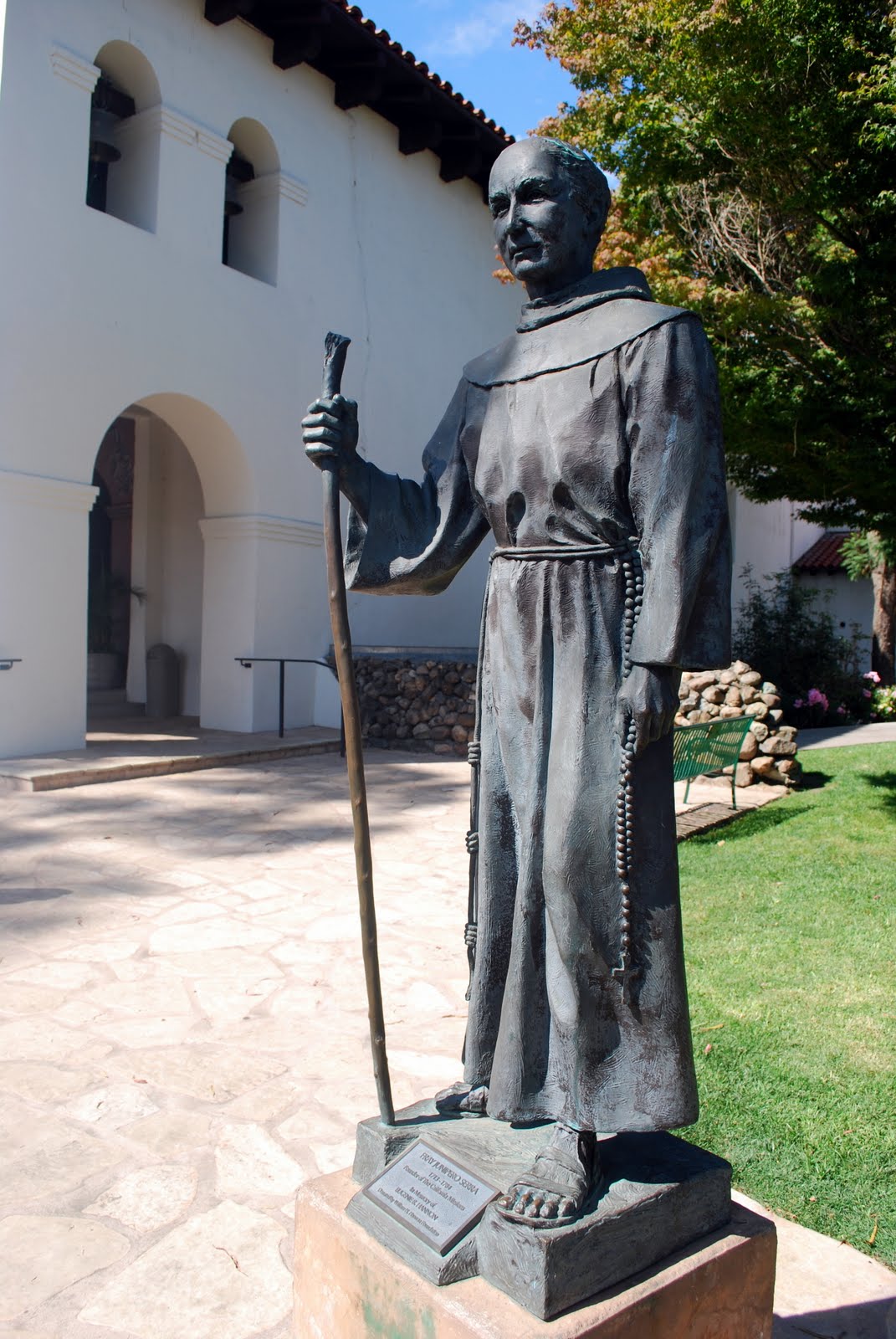

As the fifth California Mission founded by Father Junipero Serra, on Sept. 1, 1772, it was named after Saint Louis, Bishop of Toulouse, France; a 14th century Franciscan. The Mission is located in a spacious valley along the central coast which the Spanish named "La Cañada de los Osos" (Valley of the Bears) when they discovered many grizzly bears living there. 


The Mission church is unusual in its design. it has a combination of belfry and vestibule and a long secondary nave to the right of the altar which forms an L-shaped church plan. It is a design not found in any of the other California Missions.
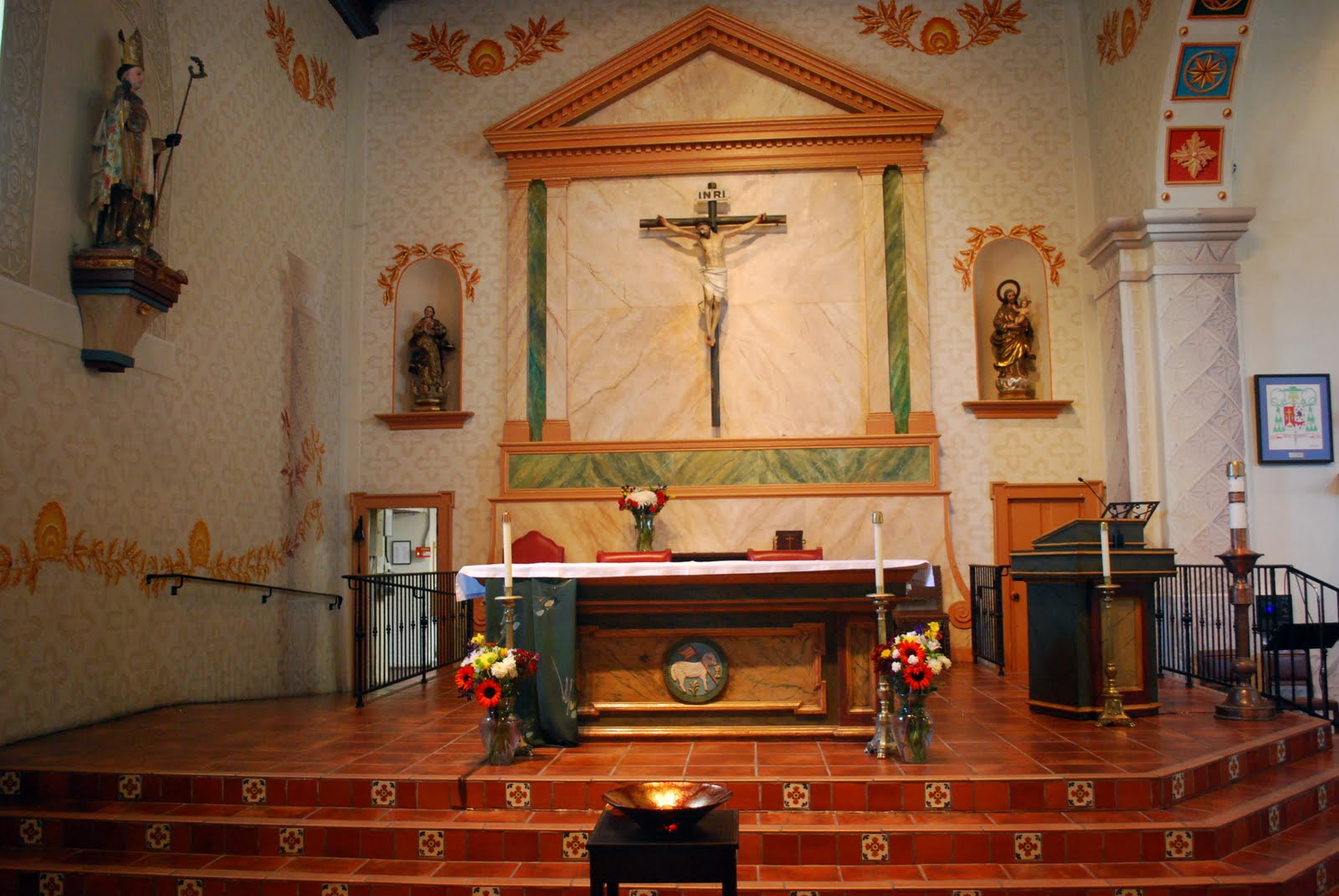


The interior of the Mission was restored back to it's original state in 1934, and it is still used as an active parish church.


The San Luis Obispo de Tolosa Mission has a museum that features a rare collection of early California photographs, authentic Serra relics and specimens of Chumash Indian craftsmanship.


I found this collage of early 1900's photographs of all the 21 California Missions very interesting. Notice how many were in rural locations and now those same Missions have had cities grow up around them. 


The San Luis Obispo de Tolosa Mission grounds were beautiful.  Notice the red tile roofs and the long grape arbor. Under the three bells that were on display (upper left corner of the collage) was a commemorative plaque explaining that the Mission's original bells were lost to time, but these bells were two second and one third generation of bells, called "Joy," "Gloria" and "Sorrow." All of the Mission's bronze bells were usually made in Lima, Peru. Being a bell ringer at the Mission was an honor and it took up to two years to learn the bell ringing craft, as there were complicated bell patterns used to wake the mission inhabitants in the morning, call them to mass and announce the beginning of the siesta. The last two bell ringers at San Luis Obispo did this job for over 60 years each!


The photo on the left of Ah Louis (Wong On), 1840 -1936 - a prominent historical figure who helped to build the town of San Luis Obispo, was in the Mission's museum.  His store is now a historical landmark. The bell located next to the store was donated by Howard Wong Louis, his son, in memory of his father.  Ah Louis was a Chinese American pioneer who founded his store in 1874 to serve as a grocery and merchandise store, employment office, bank post office and pharmacy.  The store was used by the Chinese laborers that were living in the area and working to dig the eight tunnels through the mountains of Cuesta for the Southern Pacific Railroad, from 1884 to 1894.


Our next stop was the third largest wine growing region of California, beautiful Paso Robles, where I was surprised again to be greeted by a statue that I have been fortunate enough to see in Florence, Italy, in Sonoma, California and in Sydney, Australia. Can you guess what it is? If not, I'll be showing it in an upcoming post. It definitely seems to be an unusual "good luck" charm for me!


I'm linking this post to the "Outdoor Wednesday" event on Susan's blog A Southern Daydreamer. Thank you, Susan!


Bookmark and Share

Solvang -- Danish Capital of California


Snuggled in the Santa Ynez Valley in Santa Barbara County, is the charming town of Solvang, which translates a "Sunny Meadows," and is known as the 'Danish Capital of California."  One of my husband's co-workers told us to make an effort to take a detour east from Santa Barbara to visit this town on our trip north to San Francisco along the Pacific Coast Highway. She knew that we'd enjoy its friendly, fairy tale appearance.


Solvang was founded in 1911 on almost 9,000 acres of the Rancho San Carlos de Jonata Mexican land grant, by a group of Danes who traveled west to establish a Danish colony far from the Midwestern winters. There is still a significant Danish population in Solvang, and a number of bakeries, restaurants, and merchants offering a taste of Denmark. The architecture of many of the facades and buildings reflects traditional Danish style.


There was so much to see and do there that I'm sorry we could only spend one afternoon walking around town.


On the top floor of this charming little book store called The Book Loft, located at 1680 Mission Drive, was the Hans Christian Anderson Museum.  Hans Christian Anderson was Denmark's most famous writer.  Although Andersen wrote travel journals, plays, novels, and poetry he is best know for his endearing children's Fairy Tales, which have been translated into more than 100 languages.

The Book Loft also contained a large collection of books about all the Scandinavian countries,  books in the various Scandinavian languages, as well as book in English, and a large selection of children's books.


The museum is devoted to presenting the author's life and works. Displays include models of Andersen's childhood home and of his The Princess and the Pea fairy tale.. The museum also contains hundreds of volumes of Andersen's works, including many illustrated first editions.


We also took some time to visit the Mission of Santa Ines located at 1760 Mission Drive in Solvang.  Santa Ines is the nineteenth of 21 missions established by Franciscan priests from 1769 to 1823.  It was founded on September 17, 1804 by Father Estévan Tapís. Santa Ines is the Spanish version of the name "Saint Agnes." Early English settlers changed the spelling to "Santa Inez" when naming the mountains surrounding the area. Saint Agnes was a Christian who was martyred for her faith in Rome in 304 AD. 


The interior of the church is beautiful and very decoratively painted. The statue of St. Agnes, dating from the 18th Century, is located in a niche above the main altar, and almost appeared to glow, as the soft afternoon light shone upon it.  The mission is still an active parish.


The historical museum at Santa Inés is one of the best in the mission chain. It contains an extensive display of Latin missals and handmade parchment music books, some far older than the mission and many magnificent works of art work, vestments, statuary, documents and mission  artifacts.


As with all the missions we visited on this trip, the gardens and cemetery of Santa Ines were lush and peaceful. We really enjoyed visiting this "Hidden Gem of the Missions," as it is also known.


Before we departed Solvang the next morning we stopped at Olsen's Danish Bakery for a Danish pastry and coffee.  There were so many delicious pastries to chose from that of course we had to have more than one!


We went back on the road, headed towards San Luis Obsipo.   I had to visit a fun location there that I read Susan Branch blog about ... I love Susan's cheerful  blog! I'll be sharing more about that in my blog post for Pink Saturday .. you won't want to miss it!

I'm linking this post to:

Mosaic Monday
Blue Monday
Ruby Tuesday
Our World Tuesday
Rednesday

Many thanks to all the blog hosts!


Bookmark and Share

Old Mission Santa Barbara, California


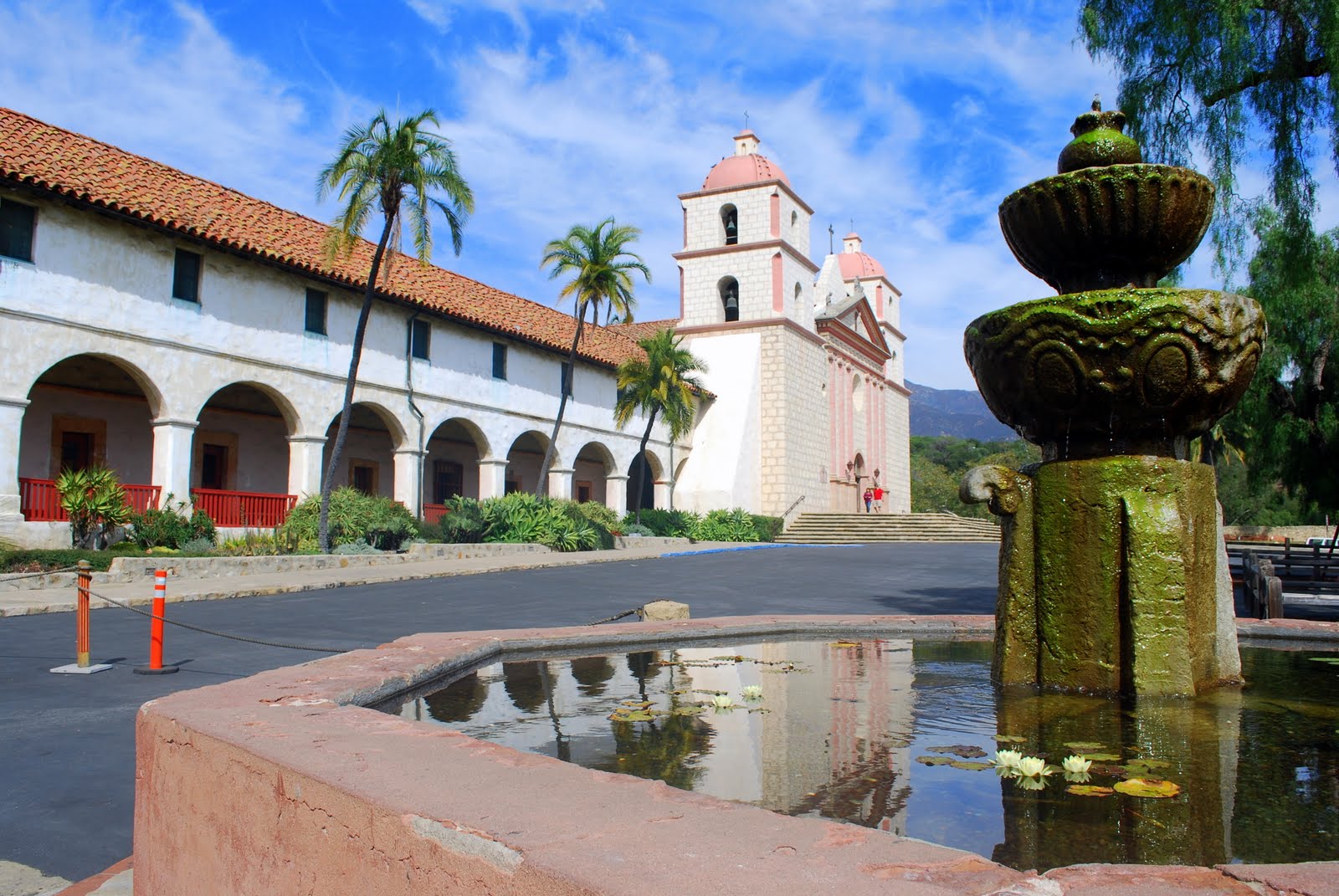
During our recent visit to California, my husband and I were so captivated by the beauty of the Mission of San Juan Capistrano, which you can read about on this link, that we decided to visit  a few more missions along the path of our Pacific Highway coastal trip to San Francisco. The Mission of Santa Barbara is located at 2201 Laguna Street, was founded in Founded  on the Feast of St. Barbara, December 4, 1786, and is known as the "Queen of the Missions."   It was the first to be christened by Father Fermin Lasuen, and has continuously served as a parish church for the local population since its founding.


Santa Barbara was the tenth of twenty-one California Missions to be founded by the Spanish Franciscans. The original church was destroyed in 1925 by earthquake, but restorations have returned it to its original grandeur, and its twin bell towers and Doric facade present an imposing impression of strength.


The interior of the church is impressive.  Its walls are full of beautiful religious themed paintings.


Some of the artwork and statues inside the Mission Santa Barbara Church.


A tribute statue to Father Junipero Serra, who had founded the first nine Missions, and had died 2 years before Mission Santa Barbara was founded. Notice the "El Camino Real, " or The Royal Highway, bell marker behind the statue.  The missions were placed a day's walk from each other, about thirty miles apart. The entire span of missions along the El Camino Real is 650 miles, mainly along the present Highway 101.  In the1920s bronze mission bells were placed along the highway to let motorists know they were traveling the historic El Camino Real, although almost all of them no longer contain signs that indicate the distance to the next Mission, as this one does.


The beautiful fountain in front of the Mission was built in 1808.


When the Mission period was over, the buildings were used for a number of purposes, such as a high school, a junior college, a seminary, and the Mission church today is used by the Roman Catholic Parish of St. Barbara.


The Mission occupies over 10 acres of beautifully manicured gardens, and also houses a museum.


Some of the beautiful pink roses in bloom in the Mission garden.


Just look at the size of this grape vine remnant from the year 1800!


Some of the interesting artifacts inside the Mission's museum.


The small carving above this door tell you that you are now entering the Mission cemetery.


Santa Barbara's culturally diverse early settlers are buried here as well as approximately 4,000 Indians, including Joana Maria, the abandoned woman of San Nicolas island. Her life is portrayed in the book "Island of the Blue Dolphins." She was buried here in 1853 but the exact location of her grave is not known.


Another interesting sight in the cemetery was a large  Moreton Bay Fig Tree that was planted around 1890.


After our visit to the Mission of Santa Barbara we headed back onto the road, but this time we were taking a slight detour inland off the Pacific Coast Highway towards the Saint Inez Mountains to stay in a town that recommended by one of my husband's co-workers. I'm sure you will want to return to my blog to see it in my next post,  as you will find it absolutely delightful!

I am linking this post to:

"Pink Saturday" on Beverly's blog How Sweet The Sound
"Spiritual Sunday" on the Spiritual Sunday blog
"Seasonal Sundays" on The Tablescaper blog

Many thanks to all the blog hosts!
Pam of the blog "Abiding in Love" is doing a My Memories Digital Scrapbook give away and asked me to spread the news! If you remember, I did a give away of this wonderful software a short time ago and I have been enjoying using it to make pages of my grandson's photos. Please visit Pam's blog and leave a comment to have another chance to win this wonderful software.


If you can't wait to win,  you can go to the My Memories web site and order this voted  #1 digital scrapbook software no.  If you enter this code STMMMS34516 at check out, you will receive $10 off the price! It's a wonderful opportunity to finally scrap all those wonderful photos you have in your computer files.


Bookmark and Share

Mission San Juan Capistrano


The Mission of San Juan Capistrano, also known as "The Jewel of the Missions," is the only mission located in Orange County, California, and is located at 26801 Ortega Highway, San Juan Capistrano, California.  My husband and I took a detour form our northern journey on the Pacific Coast Highway, Route 1,  to visit the Mission, as it was one I've always wanted to see.


Much of California's history began with the Spanish Missions. The chain of 21 missions along California's El Camino Real ("The Royal Highway") represents the first arrival of non-Native Americans to California. The California Mission Chain was started in 1769 by Father Junipero Serra at the direction King Charles III of Spain. King Charles wanted to establish permanent settlements in "Alta California," to keep control of the land as other people and countries were beginning to come to the area, and also to convert the natives to Christianity so that they could become good Spanish Citizens. The missions were placed a day's walk from each other, about thirty miles apart. The entire span of missions along the El Camino Real is 650 miles.


San Juan Capistrano was the 7th mission and named for Crusader Saint John of Capistrano. It is now a historic landmark and museum consisting of 10-acre grounds of gardens, fountains and adobe preserved architecture. You can read the entire history of the Mission of San Juan Capistrano on the mission's web site at this link


I was amazed by all the beautiful gardens on the mission grounds.....


...that were full of flowers even though it was the middle of October.


This beautiful pink bougainvillea vine growing up the side of  abuilding was enormous!


.I saw so many butterflies flying around everywhere on the grounds.


One of the many arched corridor walkways in the Mission.


This is the entrance to the Serra Chapel, which was built in 1777.  It is the oldest building still in use in California and the only surviving church where Father Serra said Mass.


  The church is adorned with a beautiful 300 year old baroque gilded altarpiece that was imported from Spain.


Some more of the exquisitly detailed religious artifacts within the church.


Besides the gardens, other areas of interest within the Mission walls include the early adobe barracks, Friars' quarters, olive millstone, cemetery, aqueduct system, and the ruins of the Great Stone Church.


The "Great Stone Church" was designed in the shape of a cross, and once held seven domes and a bell tower so tall it could be seen from ten miles away. Begun in1797, it was completed in 1806, and was the grandest church in all of California.  Sadly, itt was was severely damaged by an 1812 earthquake during the celebration of a Mass.  Forty native worshipers, and two boys who had been ringing the bells in the tower, were buried under the rubble and lost their lives. They are interred in the Mission cemetery. The ruins are currently being preserved by archaeologists and engineers.  A model of how the church looked before the earthquake can be seen in the forefront of the photo above.


Another view of the ruins of the Great Stone Church.


We planned to spend only an hour visiitng the Mission, but my husband and I were so enthralled by its beauty and solemnity, that we spent a longer time walking around the grounds. 


From the soft gurgle of water flowing from its fountains...


...to the shade and coolness of its arbors....


I felt a sense of peace and timelessness there that I did not want to relinquish.


Visiting the Mission of San Juan Capistrano fulfilled a wish I had since I was a child, when I heard about the miracle of the yearly return of the Swallows to the Mission every March 19th, on St. Joseph's Day. They land at the mission as the bells ring in the church. Visitors from all over the world come to town awaiting their arrival and there are celebratory fiestas as well as a parade. You can read more about rhe retun of the Swallows on the Mission's web site at this link.

The piano in the photo above is in the mission and is the one that belonged to Leon Rene who wrote the tune"When the Swallows come back to Capistrano."  The YouTube video below of Pat Boone singing the song shows what the Swallows look like and also some scenes from the Mission.


Unfortunately, I read that the large number of Swallows that once descended on the Mission have been declining over the yerars, due to over development in the area.  Even so, enough still arrive to continue the celebration!   I would love to be there one day when they arrive, wouldn't you love to be there too?


Happy Veteran's Day!


I'm adding this post to:

"Pink Saturday" event on "How Sweet The Sound"
Seasonal Sundays on "The Tablescaper"
Shadow Shot Sunday- on "Hey Harriet"
Today's Flowers- on Flowers From Today


Bookmark and Share